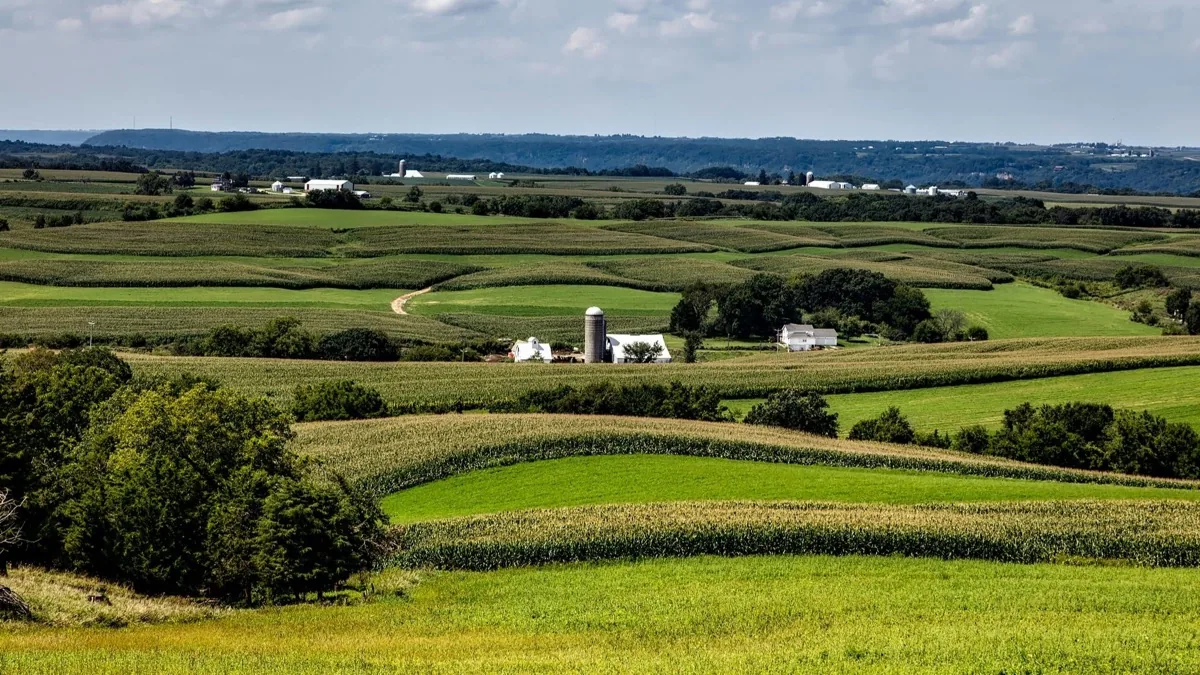
Iowa home inspections take place against a backdrop of severe weather, aging housing stock, and geography that has produced some of the most consequential flood events in Midwest history. The state's continental climate delivers extreme temperature swings across the year, frequent severe thunderstorms, an average of around 50 tornadoes annually, and the occasional derecho with straight-line winds that rival hurricane intensity. The 2020 derecho that swept across Iowa caused damage measured in billions of dollars, and its effects still surface in inspection reports today.
The housing stock is older than the national average. Cities like Des Moines, Cedar Rapids, Davenport, and Council Bluffs contain significant inventory built between 1890 and 1940, followed by heavy postwar construction through the 1970s. That mix produces predictable inspection findings: knob-and-tube wiring in prewar homes, Federal Pacific and other outdated electrical panels in postwar homes, cast iron and galvanized plumbing throughout, and asbestos-containing materials in insulation, siding, and floor tiles from the 1930s through 1970s eras.
Iowa soils are dominated by glacial till and prairie loess, with substantial clay content in most areas. These soils expand when saturated and contract during dry periods, creating movement pressure on foundations. Basement walls made of stone, concrete block, or poured concrete all show the effects of this cycling, particularly in homes older than 50 years. Stair-step cracks in block walls, horizontal cracks from lateral pressure, and settlement at building corners are common findings that require careful evaluation.
Flooding is a defining Iowa concern. The 1993 Great Flood along the Mississippi and Missouri rivers, the 2008 floods that devastated Cedar Rapids and much of eastern Iowa, and repeated smaller events have produced housing stock with flood damage histories. The FEMA Flood Map Service Center is essential reading for any Iowa home purchase near a floodplain. Iowa also has significant areas of high radon potential; the Iowa Department of Health and Human Services reports that more than 70 percent of Iowa homes have radon levels above the EPA action threshold.
Iowa requires home inspectors to hold state licensure under Iowa Code Chapter 103A. This is a meaningful protection for buyers because it establishes minimum training and insurance requirements. Iowa inspectors must complete initial coursework, pass a state exam, and maintain continuing education. Typical inspection costs in Iowa cities run $375 to $600 for single-family homes, with radon testing, sewer scope, and mold assessment commonly available as add-ons.
Common Iowa Considerations
- Storm and hail damage to roofing and siding
- Foundation movement from expansive clay soils
- Basement water intrusion
- Radon (much of the state is EPA Zone 1)
- Aging electrical systems including knob-and-tube and Federal Pacific panels
- Cast iron and galvanized plumbing in prewar homes
- Freeze-thaw damage to exterior concrete and masonry
- Flood-related repairs and disclosures
Local Requirements: Iowa requires home inspector licensing under Iowa Code Chapter 103A; state exam and continuing education required; radon testing recommended in most counties